This is the master blogpost for the short story “The Last White Man” by Robert Howard.
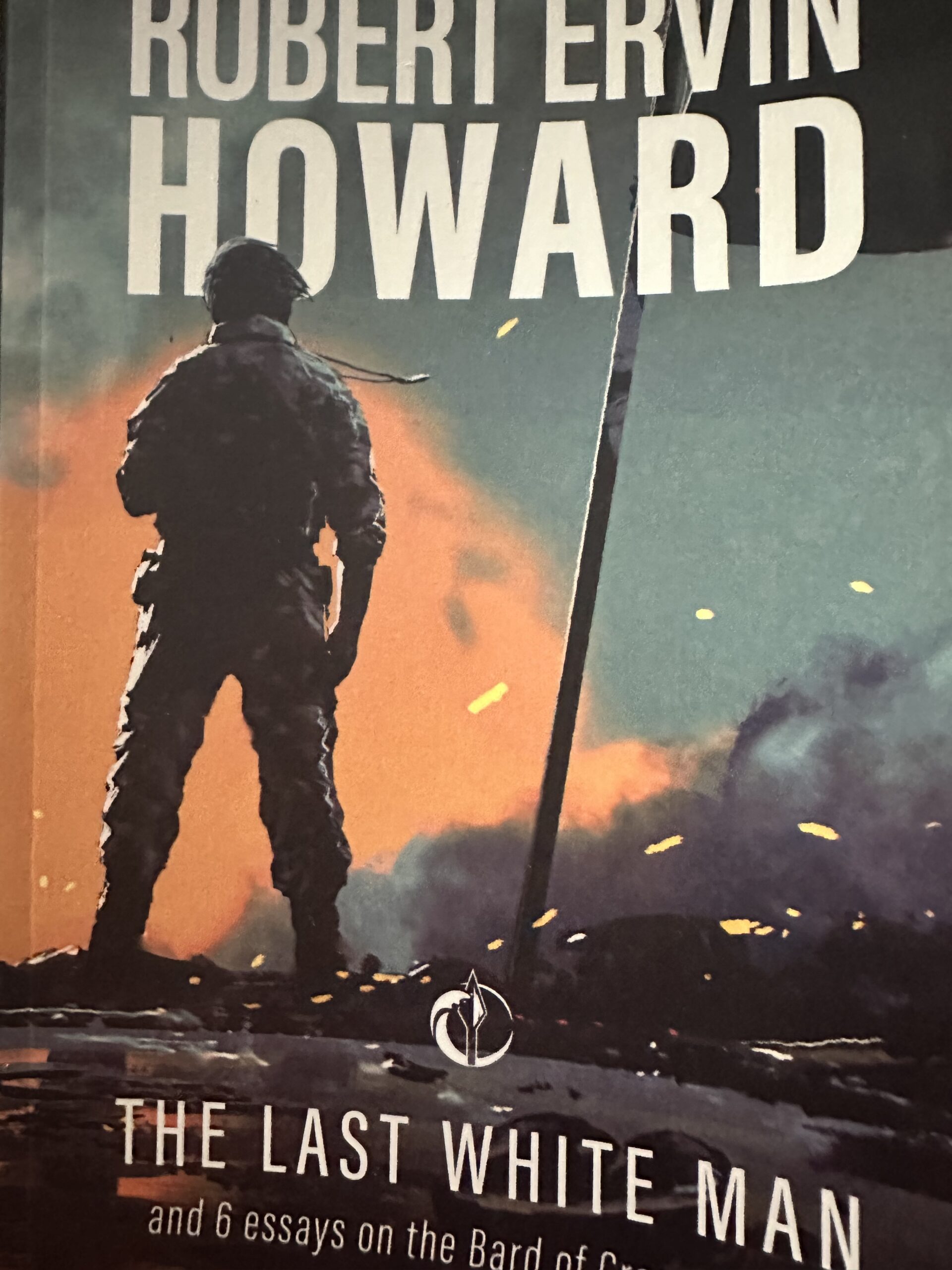
The Non-Spoiler Review is here
+
+
+
+
+
+
This is the master blogpost for the short story “The Last White Man” by Robert Howard.
The Non-Spoiler Review is here
+
+
+
+
+
+
This blogpost is about my personal background and why I started this blog.
My name is Zeke Berk (not my real name). I am a lifelong reader and writer. In grade school I wrote a short movie script as part of a class project in 6th grade (Hi, Mr. Zucker!). It didn’t go over well. Good ol’ Mr. Zucker considered it too short and a number of the students thought it was stupid. But I wrote it.
//
I’ve been trying to write the Great American Novel ever since. Obviously, I’ve failed at that. In fact, I’ve failed at writing anything. I have at least a dozen half-written novels that I’ve given up on. Instead, my plan is to set aside my novel writing plans to focus on this blog for the next several years.
Initially I started a very short-lived YouTube channel. I was going to be a booktuber. I stopped after two videos. Not only were the videos terrible, but I vastly underestimated how much time it took to make them. And I discovered that the 8-minute YouTube video is a very particular format that is very limiting. I like blog posts better because I can thoroughly cover what I want to say by making several shorter blog posts instead of an 8-minute video that has to be structured in a certain way to maximize retention. In short, I write a blog because the social media algorithms suck. I’d rather take my chances with Google’s SEO. Even during the age of the AI overview.
It is clear to pretty much everyone that contemporary literature has gone nowhere since about the 1990s. Infinite Jest and I guess Song of Ice and Fire were the last major books to feel fresh and make an impact (although I haven’t read either one). So the novel has died apparently.
//
But I still think there’s a ton of value in literature, even if nothing of note is being currently written. Only in literature can you get a truly singular perspective that quite frankly can change how people see the world. And even though the only good literature is old literature that old literature can still feel fresh today.
//
I recently read New Rose Hotel and was shocked at how relevant it was. Not because of Gibson predicting some high tech future. But it is relevant because how it predicted the future of mass migration. It shows that once the economy gets deregulated the races also get deregulated. Most liberals today think of racial mixing and racial deregulation as a good thing but it is very clear that Gibson (or at least the Gibson of 1984) thought racial mixing was a bad. And once I read New Rose Hotel I almost fell off my chair. Because criticizing racial mixing is so taboo today no one would write something like that now. But it still got written and it is still worth talking about because of how relevant it is to contemporary life.
//
As the previous paragraph suggests I do not look at things from the same POV as the standard liberal who talks about literature. My politics are not just right wing but radically so. And they get more radical every moment that passes. I’ll get into this more as I review more and more literature, but my politics are essentially white nationalism. And I plan to look at literature from a white nationalistic prism.
//
I do this because I have always seen this huge disconnect between the average liberal English teacher teaching the canon and the fact that all the writers who wrote the canon were insane racists/antisemites/misogynists. They were all white nationalists. Even “liberal humanists” like Shakespeare.
//
So a major theme of this blog will be to reevaluate literature from the lens of how the dead male white writers saw the world and not how 21st century liberalism sees the world.
I feel there is huge opening in the field of literature for genuinely right-wing ideas because standard liberalism has exhausted itself so anything new in literature will be right-wing. Accordingly, I plan to review what passes as right-wing literature today. Books from Passage Press and Antelope Hill, for instance. We’ll see if they actually have anything to say about our current times or if they just want to write books for men that people wrote in the 1980s (if the later is the case why publish anything new – just read another Jack Reacher novel).
All of this is a lead up to my writing. I hope my thoughts on literature attract enough attention so that people are interested in reading what I’ve written. My fiction is at www.blackflagliterature.com. I call my writing Black Flag Literature because I write the types of stories that a more respectable literary industry wouldn’t dare touch. Stories that talk about race from a white perspective, for instance.
//
My plan is to write this blog and complete 100 short stories for www.blackflagliteraure.com and only then go back to write the Great American Novel. Wish me luck.
+
+
+
+
+
+
This blogpost post is about the character of Automatic Jack, the narrator in William Gibson’s Burning Chrome. The Burning Chrome master blogpost is here.
The narrator is called Automatic Jack. The name “Jack” is a typical William Gibson cyberpunk main character: it signals that the narrator is your average everyday white guy. He’s the type of guy Tom Hanks would play. The 90s never had a great cyberpunk movie, but if there had been one Tom Hanks would have played the main character.
//
The “Automatic” part of his name is also pure cyberpunk. It recalls the gunslinger archetype – the whole “console cowboy” – so instrumental in cyberpunk with its deregulated and lawless economy. “Automatic” also hints at Jack’s Duralumin arm.
//
But the thing that really stands out to me – in a negative way – is how Jack reacts to the whole love triangle part of the story. He takes an interest in Bobby’s girlfriend, disapproves of Bobby’s casual attitude to her, sleeps with her – then seems to have no emotional reaction to her continuing to hang around Bobby. This seems unnatural to me.
//
Call me a jealous guy I guess, but Jack should have a more emotional response to the sexual competition between him and Bobby. But the text shows nothing. There’s no feeling at all. It’s almost as if Jack is just the narrator and not a real flesh and blood person. If you’re going to write it like that, why write it in the first person? Just do the omniscient third person “view from God.”
Maybe Jack’s lifeless personality is intentional. I think not, but the possibility is worth exploring.
//
One way Jack’s lifeless personality makes sense is if the effect of his cybernetic arm – the Duralumin – has made him lifeless. The text explains that he got injured in some war and now has this cybernetic arm that he uses during the Matrix run to burn Chrome. It’s not that interesting of a backstory actually. Johnny Mnemonic’s silicon brain and Asian eyes are much more interesting.
//
In fact, Jack doesn’t really need the cybernetic arm at all. Unlike Jonny Mnemonic, he can perform his duties with a normal human hand. So maybe the reason Gibson throws a cybernetic arm on him is to show how technology desexualizes and neuters a person. Jack has porn dick basically.
//
But that interpretation is doubtful. It probably only occurs to me from the other side of 30 years of internet pornography. I doubt that’s what Gibson was talking about. Instead, Burning Chrome, like all of Gibson’s cyberpunk stories, simply lack sex. Either due to 1980s censorship or for whatever reason that a writer who is known for me tactile and detailed decided didn’t include any actual human sex in his most famous works.
//
I wrote a cyberpunk story that revolves around a last-ditch tryst between two lost souls in a forgotten rust belt town. It’s called THE LAST BLONDE. You can find it at www.blackflagliterature.com
+
+
+
+
+
+
This blogpost is about the character Bobby Quine in Burning Chrome by William Gibson. The Burning Chrome master blogpost is here.
Gibson describes Bobby Quine’s physical description in two ways. First, he describes him as a a “thin, pale dude with dark glasses.” In other words, he is a just like the likely reader – a nerdy white guy with glasses. Gibson seems to be using it as a shorthand to say, “This guy is one of us. Identify with him.” The description is so unimaginative, I missed it the first several times I read the story.
//
The second description is much more unique/imaginative/precise. It describes Bobby as having a “young-old” face. This captures the stress of not just hacking into the matrix, but having to compete daily in a economy that has been completely deregulated. Any 28-year-old white color worker faced with the threat of AI and outsourcing and H1B would have the same look.
Gibson tells us several times that Bobby is a cowboy, and he makes clear that Bobby is a console cowboy. Cute phrase. It hits Gibson’s usual themes of a deregulated “wild west” but does so in a striking image: imagine a cowboy at High Noon but instead of a revolver at his side, he has a computer console.
//
It’s a bit of a flattering image for the white nerdy kid who’s into computers in 1984. He gets to leave his nerd shell and be a jock, be a cowboy. There’s a good amount of wish fulfillment at play. No different than the same thrill that women get when they read a romance novel about some tall, dark mysterious man “taking” them. So, the image is great – literary but not too literary – but it is worth keeping in mind what’s working underneath the surface.
One matter of dispute is whether Bobby is actually in love with Rikki. Is he actually burning Chrome to help Rikki out so she can buy some cybernetic eyes? Or is he just telling himself that because that’s what he always does. He always falls hard for some bargirl and then quickly recovers when the quick romance burns out.
//
I think the story only makes sense if Bobby only tells himself that he loves Rikki. From Jack’s description of Bobby’s habits it seems that Bobby is acting throughout the story as he always does. There’s no evidence that he’s being sincere when he says “I’m doing it for her. You know I am.” Bobby uses women as a “private tarot” or a omen. Jack in facts mentions that he’s seen the exact scenario play out with over a dozen women. So, no, Bobby doesn’t have any self awareness. He’s only aware in the matrix, a cowboy playing with his console.
//
THE LAST BLONDE is my take on the cyberpunk genre. You can read it at www.blackflagliterature.com
+
+
+
+
+
+
This blogpost is about the character Rikki Wildside in Burning Chrome. The Burning Chrome master blogpost is here.
Rikki is 19 and apparently a bar girl. Bobby Quine, the console cowboy, meets her in the bar, the Gentleman Loser. He takes her home to his apartment that he shares with the narrator, Automatic Jack. Bobby isn’t trying to “pull” a girl from the bar manosphere style. Instead, he’s looking for a good luck charm and apparently only young women can give him good luck.
//
We first meet her when Bobby takes her home to the apartment he shares with Jack. Jack’s description of her is telling: “Tall, 19 or maybe 20, and she definitely had the goods.” “Definitely had the goods” seems to be Gibson-speak for “she was beautiful.” There’s a missed opportunity here. Gibson wants to let the reader know that she is beautiful without thinking through why Jack finds her beautiful. “She definitely had the goods” is also not a natural way of describing a pretty girl that just walked into a man’s life.
//
Surely, he notices something more specific about her physical features. It’s completely unnatural that Gibson doesn’t have Jack mention her breasts, or ass, or waist, or face. The first thing Jack notices is her freckles. Come on. Who gets an erection from freckles?
//
But it’s not just the freckles. Gibson describes her eyes as amber or French coffee. He then describes how her jeans are rolled up halfway up her calves and how her red belt matches her sandals. None of this is what a man who just saw a 19 year old “who had the goods” would focus on.
//
Beyond the sexless description of Rikki is how much description there is. The Finn is not physically described. Bobby is only described as possessing a young-old face. Jack is not described. But Rikki is described extensively in strange ways. In that way, the story a throwback to 1940s noir where the girl is primarily the sex object and doesn’t really do anything herself except be the object of desire of the two main male characters. You never see that in contemporary work, so it’s almost refreshing.
//
I can’t picture Molly Millions as just a hot women hanging around a couple of genius hackers playing the girlfriend part. If she was just Case’s or Johnny’s girlfriend she wouldn’t be interesting. She’s a totally different character than Rikki. The only argument is that Rikki was a young naive girl and as time went on she got worldly and cynical and turned into Molly.
//
That’s possible. But to credit that theory the writer would need to show that transformation. The transformation simply can’t be assumed. And Gibson has never shown that. There’s no Molly Millions prequel for what ever reason. You would think there’s a story there. Especially in a “the future is female” environment where traditional sci-fi characters are routinely swapped with characters who are non-male and/or non-white. But he’s never given us that.
//
What Gibson does give us is that Rikki gets some cyberware in her eyes and of coarse Molly has her famous mirror eyes. So that’s the connection people who think Rikki is just a younger Molly Millions. But there really isn’t anything special about cybernetic eyes. We see the same thing in Johnny Mnemonic. It’s basically a trope of the genre. With the eyes being “the window to the soul”, if you want to show a world that where technology has supplanted technology, you show cybernetic eyes.
//
So, to answer my question: No, Rikki isn’t Molly Millions. They’re polar opposites.
//
You can read my stab at the cyberpunk genre by reading THE LAST BLONDE at blackflagliterature.com
+
+
+
+
+
+
This blogpost is about the character of Finn the Fence in William Gibson’s Burning Chrome. For the master blogpost of Burning Chrome see here.
Finn is a fence. He runs a marketplace of stolen goods. He is a major character in Neuromancer but he plays a small but vital role here in Burning Chrome. We meet him when Jack needs to buy some “hot software.” Finn – like any good salesman – immediately tries to sell Jack a gun, even though Jack doesn’t need a gun. Jack needs some software.
//
Finn only has one piece of software. He got it off some “bridge-and-tunnel guys from Jersey.” Try to picture Tony Soprano in a cyberpunk movie. It fits actually, I think. It feels weird because you’d have to take the mobster out of Jersey – so it feels like a fish out of water. But Soprano would thrive in a world of hackers and stolen goods and freely available guns. Where the only thing that matters – the only thing that is real – is the next payment. There won’t be envelopes full of cash, because money is digital/virtual, but Soprano would do just fine in a cyberpunk world.
//
So, it turns out the software is stolen from someone’s wallet and sold to Finn the fence. Along with this diskette that contains the software, the thieves from Jersey dropped off the victims’ Belgian passport and watch made by a German car company (Porsche). This is where the name comes in.
//
“Finn” of coarse makes one think of Finland. So imagine the scene of a Finnish guy in some dilapidated mall stall selling the loot from some Belgian guy’s pockets including some killer software program and a watch from Germany. It’s the ultimate scene showing all-powerful borderless capitalism. This is what tech CEOs imagine America to be when the argue for importing infinity Indians. The perfect depressing marketplace, where people are just names on a spreadsheet completely replaceable.
//
The final kicker is that Finn isn’t described at all. There is no physical description of what he looks like. He’s just a faceless merchant selling stolen goods from every country on Earth. I didn’t catch that detail until I read the story about 10 times, but it’s a vitally important detail and clearly intentional. Especially because Gibson loves to describe people in unique ways (Chrome’s “heart shaped face” for instance).
//
To me this scene of Jack buying the software is much more “cyberpunk” than all the scenes of actually burning Chrome down in the Matrix. Forget “cyberspace.” The real heart of the story is down here in the middle of some pile of junk next to shelves stacked “with old skin magazines.”
//
We’ll meet Finn again in Neuromancer. Can’t wait.
//
Check out my cyberpunk short story, THE LAST BLONDE, at www.blackflagliterature.com
+
+
+
+
+
+
This blogpost is about the character Chrome in William Gibson’s Burning Chrome. The Burning Chrome master blogpost is here.
Despite being the target of out protagonists, and thus the villain, Chrome is described in the physical world until halfway through the story. The first half of the story is focused on the Matrix run our heroes are undertaking. There we meet Chrome’s representation in cyberspace – her foreboding ice castle. But we didn’t see a mention of her until the midpoint of the story when the Jack gives us the lowdown on Chrome.
//
Her face is described as “heart-shaped” that frames the nastiest pair of eyes. And she’s looked fourteen for ages. She’s hopped up on hormones and serums. Gibson’s description gives the impression that she is a young female version of Dracula. “The nastiest pair of eyes you ever saw” combined and contrasted with the young looking “heart-shaped face” gives strong super villain vibes. And the fact that her appearance relies on drugs is similar Dracula’s appearance relying on drinking blood.
//
She manages the Mob’s money so there’s a sense she is sucking money from the everyday lowlifes that populate the Sprawl in the same way that Dracula sucks the blood of the townspeople.
The narrator has seen Chrome in the bar a handful of times. It is an interesting image of some young girl walking around a bar and all the adults are afraid of her because she’s the Mob’s financier. The image is very cyberpunk: the child is in the bar because the bar doesn’t enforce any border around age and everyone’s afraid of the rich child because money is all that matters. I wish Gibson had developed this image further, because as written it is just a quick aside that briefly interrupts the narrative.
//
There’s probably a feminist angle someone (not me) would write about why the villain is seen as a girl who is of the age where she just reached sexually maturity. That argument would point out that the 14-year-old girl is the villain because the average high tech low sex guy science fiction reader finds the sexually mature female intimidating. But that angle is more polemic than criticism. But it’s worth thinking through how other people could interpret the story – even people like your average blue haired feminist with tenure.
//
My cyberpunk story also has a scene where a young kid walks into a bar, and it is completely unremarkable because all borders have been broken down. I call it THE LAST BLONDE and you can find it at www.blackflagliterature.com
+
+
+
+
+
+
This blogpost is about how William Gibson physically describes the Matrix in Burning Chrome. The Burning Chrome master blogpost is here.
Early on in Burning Chrome Gibson describes the Matrix as an electronic consensus-hallucination that facilitates the exchange of massive quantities of data. The phrase electronic consensus-hallucination has become famous as a good description of the modern internet. But as I show over here, Gibson wasn’t trying to predict the future, but he was responding to the contemporary world he was living in and wanted to show a future where everything is deregulated and how technology isn’t a solution to those problems but rather how technology distances people from each other.
//
Beyond that basic idea, I think it is worth thinking through how exactly Gibson depicts the Matrix and how that depiction deviates from what has filtered down into pop culture.
//
Gibson describes the matrix as a “3d chessboard, infinite and perfectly transparent.” This seems to be where the word “matrix” comes from: The black squares and white squares of a chessboard combine to form a matrix. But Gibson is also very clear that the matrix isn’t a physical space like the Matrix in the Matrix movie. Gibson’s Matrix is a “colorless nonspace.” There’s no chance of thinking that the Matrix is the real world. The hackers are represented by a “little yellow pyramid.” It’s always a computer simulation.
//
Chrome, what they are trying to burn down, is represented as an ice castle. Personally, it reminds me of the lake of ice where Satan is trapped in the Divine Comedy. Just like the idea that this is just a representation and not the real thing reminds me of Paradise Lost where Milton says he’s merely translating the story of the fall so humans can understand it, but the events portrayed aren’t the events that really happened.
//
Anyways, as the hackers breach the first gate of the ice castle they see walls as “leagues of corridor, mazes of shadow.” I’m not really sure what is a “league of corridor” exactly. I interpret that as really just a series of shadowy corridors. I think this is another instance of Gibson getting way too cute and I guess his cuteness goes over my head here.
//
The ice walls “flick away like supersonic butterflies made of shade.” Another puzzling description that doesn’t withstand scrutiny. Because the Matrix is a “nonspace,” can’t one travel at will? Does it make sense to talk in distances? If no, and I think the answer is no, then what’s the virtue of a “supersonic” butterfly? Doesn’t this just mean that the walls flick away with great speed? Would these hackers really use a term like “supersonic butterflies made of shade”? Come on, now.
//
Once the outside walls have “flicked away” we get to the data towers that are the object of our journey. These data towers are described as “vertical freight trains.” Another strange simile. One defining quality of freight trains is that they make a LOT of noise. But there’s no indication that sound even exists in the Matrix. The Matrix seems to be just a visual representation. In fact, at the end when they burn Chrome, the narrator states that he thought he heard Chrome scream, but he couldn’t have. By
“vertical freight trains” does Gibson just mean that they are really tall? And not that they make the sounds freight trains make? It’s unclear to me the exact image the reader is supposed to reproduce in their mind.
//
Also, in this world do freight trains still exist? I get a chuckle out of the image of Molly Millions with her glass eyes and razor finger tips being some 19th century train conductor.
//
Next we get to the impossibly bright colors as contrasted to the dark shadows. It seems to me this would be hard to watch. If they are impossibly bright are the hackers closing their eyes? How are they seeing this? Maybe this is a nitpick, but this is something you pick up on if you read the story 10 times. I do like Gibson’s use of the phrase “nursery blues.” It shows how the Matrix is sterile parody of real life: the Matrix itself is “colorless” AKA lifeless, but the objects in the Matrix are full of color. Describing the color as “nursery blue” shows that the only life in the Matrix are the colors – there’s no real life, no nursery, only the color of “nursery blue.”
//
And then once the Russian program is inserted and Chrome is burned down, the Matrix “folds itself around me like an origami trick.” This reminds me of the origami tricks in Blade Runner. Not sure why origami is a thing in the cyberpunk genre. Here in Burning Chrome, I think it means that the Matrix is so artificial, nothing more than a child’s toy.
//
This is very different from the Matrix in the Hollywood movie. There, the Matrix is as real as real life. But in Burning Chrome, the opposite is happening. The Matrix is artifice, an illusion, created for commercial reasons that serve to distance people from each other. It isn’t a liveable alternative reality like in the Hollywood movie. Hollywood misses the point entirely and that is why Gibson never liked the movie.
//
I wrote my own cyberpunk story. It’s called THE LAST BLONDE. You can find it at www.blackflagliterature.com
+
+
+
+
+
+
This blogpost is about Chuck Palahniuk’s untitled “Woke Western” work in progress.
On his substack Chuck Palahniuk, author of Fight Club, openly contemplated writing a Woke Western. This is of coarse a very stupid idea, but it is worth examining because it reveals a lot about modern cultural production in America in the year of our Lord 2026.
//
First, he notes that there have been attempts to write a Post-Modern Western, like King’s Dark Tower series for example. He doesn’t actually give a reason for dismissing those books other than that they are in the Fantasy as well as Western genre and he apparently doesn’t like that. So, what’s his idea? What’s his twist?
//
His twist is to add some humor. Specifically, he says he wants to do something like “Cormac McCarthy, but funny, really funny.” I think he might be selling McCarthy a little short here, because Suttree can be, at times, really funny. Nevertheless, Mr. Palahniuk is capable of some humor so I guess the suggestion isn’t completely outrageous.
//
The interesting point to me isn’t the humor but the Wokeness. He says he wants the book to have “a woke-ish awareness of the damage being done to the Wild West”. One objection to this is that it has already been done. Blood Meridian absolutely has a “woke-ish awareness of the damage being done to the Wild West” sentiment.
//
It starts with The Kid leaving home at an early age and turning his back on his father and where he came from. To be divorced from all tradition is a woke thing to do. The book ends with a man inserting posts in the ground, which signals the end of the Wild West because now with fences there’s no freedom to roam.
//
This shows how the American experience in the frontier ended the Wild West, which is similar to Palahniuk’s “awareness of the damage being done to the Wild West.” So, there’s really no reason to write this book. Making it funny wouldn’t change anything. Mr. Palahniuk’s novel would be proving a point that’s already been proved. And the Novel is just one long argument isn’t it? The reader is a jury, after all.
//
I’m sure Mr. Palahniuk feels quite smug and superior to a writer like Louis L’Amour. Mr. Palahniuk wants to take something someone else has built (the Western genre) and make a few snide woke comments to show how superior he is to those old Western writers. But L’Amour at least L’Amour was earnestly building something. What Mr. Palahniuk wants to do is a teenager’s fantasy: live in Dad’s house and eat Dad’s food but crack some wisecracks at Dad to feel morally superior. Absolutely childish.
//
That aside, which character Mr. Palahniuk would select as the main character is revealing. He picks a veteran of the Confederate Army. This is a dead ringer clue that the whole project is about being smug and morally superior to his characters (and their modern-day analogues) then actually trying to depict what those characters who inhabited that world were really honestly going through.
//
He says he wants the main character to be the veteran of the Confederate Army because he wants the man to be burdened by his “poor choices.” This just proves my point. Palahniuk wants to believe that he (and the standard issue liberal reader reading this book) would make better choices. That’s a fantasy. Mr. Palahniuk would have made the same “poor choices” that his Confederate Army character made.
//
Thinking that you’d be the ONE GUY who didn’t give the Nazi salute is a comforting fantasy. But just that – a fantasy. You are actually not morally superior to people from the past. Just like people in the future aren’t morally superior to us, even though I’m sure there are things we did that will look just as bad as slavery and the rest.
//
He ends with a quote from one of these old Westerns where the writer depicts an Asian shopkeeper as a guy who’s owned a shop for 20 years but can’t figure out the impenetrable ways of the White man. Mr. Palahniuk says, “Yeah, this genre is ripe for some reinvention.” He seems to think – and assume his reader will think – that such a description of the Asian shopkeeper is so obviously wrong that the only path forward is reinvention. He doesn’t even consider that the description is true, even necessary.
//
The description to my ears seems true because obviously there is a large difference between the Asian guy and the White guy in the Wild West. The Asian is just there to run a business and make a profit off of the White guy. He sees the Wild West as just an economic zone. But the White guy is there for exploration and adventure. There really is no comparison. The two different men, with different outlooks on life are the result of two different civilizations. So, of course the Asian will find the White guy impenetrable.
//
By scoffing at this distance between the White man and the Asian man, Palahniuk is saying, “We’re all one human race, so of course there’s nothing impenetrable here.” But that is not the attitude that the people who made the Wild West took. They were racist to the core. They had to be. If they hadn’t been the Wild West would have never existed. And Mr. Palahniuk wouldn’t get a chance to earn a healthy paycheck by doing nothing but taking a genre someone else invented and inserting some standard issue Wokism. I hope he writes the book. It will be very difficult to prove me wrong.
//
Check out my story, THE LAST BLODNE, at www.blackflagliterature.com
+
+
+
+
+
+
This blogpost is about the House of Blue Lights in Burning Chrome. The Burning Chrome master blogpost is here.
The House of Blue Lights is a neuroelectronic sex shop, a sort of brothel of the mind. It’s revealed that Chrome, the person/thing they are trying to “burn” down, is the owner, as opposed to just a figure head for The Boys. It’s is somewhat notable that Gibson doesn’t use a MegaCorp for the figures that are supposedly pulling the strings. Instead it’s “The Boys.” More of a gang than a transnational corporation. Where’s the Yakuza?
//
So, the House of Blue Lights is some sort of futuristic den of prostitution but Gibson never quite clears up how the mechanics works. A shift for one of the girls working three is described as “three hours in an approximation of REM sleep” and how “the customers never complained that she was faking it, because the orgasms were real.”
//
I take issue with this vague talking around the issue instead of stating what’s really going on. There’s no real point to hide the ball unless the writer himself doesn’t have a clear vision of the mechanics of the setup.
//
Here’s what I picture: a guy (maybe more than one) sitting in a chair separated from the sex worker by some glass window. Both the girl and the customer are hooked up to some electronic apparatus via wires so that they feel the orgasm – the orgasms are real – but there is no physical touching.
//
The commercialization of sex without anything physically happening is very cyberpunk. But I could be wrong. Maybe my image is wrong. Gibson really should have been more specific and precise. I despise vague writing, because the point of reading a novel is to see a very particular artistic vision in an artistic medium that can be more detailed and specific than any other medium.
//
To say that “Well Zeke, Gibson doesn’t explain everything and spoon feed the reader,” is a horrible cop out. Not explaining everything is a virtue when the writer wants to minimize the distance between the reader and the story. “Info dumping” can often read like the novel is behind a thick piece of museum glass. But that isn’t what’s going on in Burning Chrome.
//
First, please keep in mind that Burning Chrome is very accessible. It is recommended to people who find Neuromancer a little too hard to follow, as a lot of the same ideas and characters populate both stories. So there’s no reason to hide the ball.
//
Second, Gibson spends a considerable amount of time explaining everything else about the House of Blue Lights. It’s “hushed corridors” and “tacky decorative waterfall” are mentioned as how the bouncer doesn’t like the look of Automatic Jack but lets him in anyways because everyone’s just a wallet. So given these details there really is no justification for the “hide the ball” antics about how everything really works.
//
I do like the name though. “House of Blue Lights” recalls the “Red Light” district of a seedy city, except the blue implies that something futuristic – like an electronic version of Amsterdam’s sex stalls. The reader can get that from just the name itself.
//
Despite my complaints, Burning Chrome remains a defining work of art. And it is when Automatic Jack discusses his personal trip to the House of Blue Lights that we get the famous line about “the street finds its own use for things.” Absolutely worth reading and thinking over each detail.
I wrote a cyberpunk story that applies the familiar ethos of the genre to a fresh setting. Instead of in a seedy city in the North East of the US, it takes place in the Mid-West in a rural town that died a long time ago. It’s called THE LAST BLONDE. You can find it at www.blackflagliterature.com